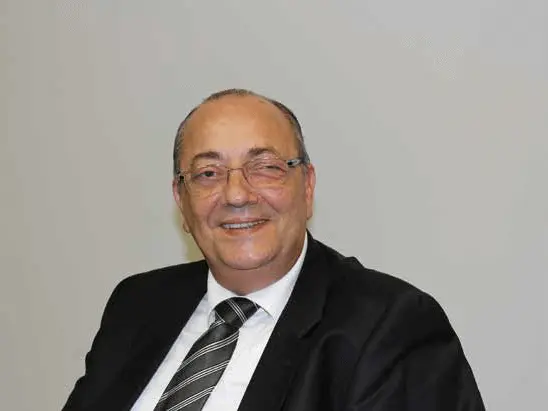
The UPSs, which provide uninterrupted electrical energy by storing alternative electrical energy from the grids, have been an indispensable part of our lives for a long time. We met with Mose Saltiel, the Vice Chairman and General Manager of Tescom, a successful player in uninterruptible power supplies sector, and talked about the UPS sector. Saltiel assessed the current situation of the sector and shared his company's future plans.
First of all, can we get to know you a little?
I was born in Izmir in 1952, and after completing my primary and secondary education in Izmir, I completed my high school and higher education abroad. I have obtained associate degree in electronics and worked in QC and R&D departments at Motorola military device manufacturing facilities for 2 years. I am still working as the Vice Chairman and General Manager at Tescom, which I co-founded in 1980, and I am trying to conduct my original profession, electronics engineering, in the best way as an administrator.
Can you tell us a bit about Tescom? How many people work?
Founded in 1980, Tescom has always been known as a company that develops and produces the first and highest quality products in Turkish electronics market. Hundreds of thousands of products we have produced so far are still serving the users in more than 40 countries, including Türkiye. We work with a team of 250 people at Tesco, which is known as the pioneer of the uninterruptible power supply market.
How did your paths cross with the DMY Group?
In 1999, Davut and Mustafa Yurttas started buying products from us while they were still the owners of Inform. We started to provide them with 3-phase Pyramid series transformer devices, particularly the SAVER and SAVER PLUS series single-phase output transformer devices, which have become legends afterwards. There was a break between 2001 – 2002. However, in 2003 we transferred 25% of Tescom shares to Davut and Mustafa Yurttas brothers upon the request from Davut and maintained our relations until 2016. In 2016, the Yurttas brothers became the 50% shareholder of Tescom.
What are your product groups? Which sectors do you offer products and services to?
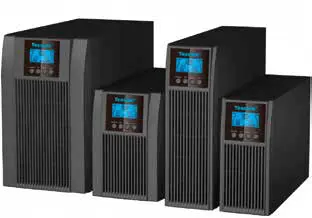
Tescom is known as the pioneer of the uninterruptible power supply sector and we offer products to all energy-related sectors, as one of the most reliable manufacturers of uninterruptible power supply and GES energy systems. The main fields we offer products and services are: Health, defense industry, communication (telecom), smoke–smokeless industries, IT, data centers, solar irrigation, hybrid energy solutions, on-grid and off-grid solar energy, rectifiers, frequency converters.
”We export 30% of our production, and we have representative offices in 40 countries.”
Can you tell us about your activities in the field of solar energy?
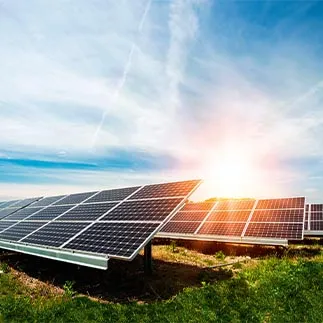
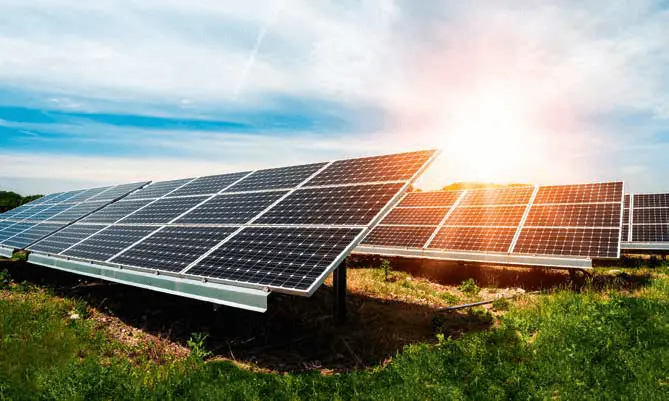
In the field of solar energy, our works on “Hybrid Uninterruptible Power Supplies” product take the lead. As for the export of these products, Tescom, with its leading position, is considered more successful and advantageous, as equivalent products in the world are very limited. Also, the 300KVA Hybrid UPS and 200kWpeak MPPTs that TESCOM has installed in Togo are feeding a whole village. We prefer to bid for small projects instead of large-scale on-grid projects.
How do you assess the current condition of the uninterruptible power supply sector both in the world and in Türkiye?
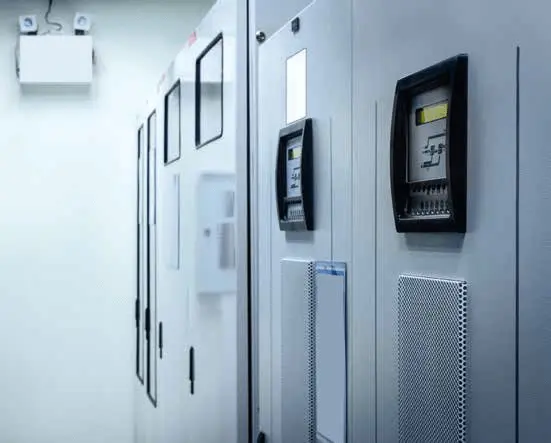
Currently, there is a serious decrease in small–scale UPS (1kVA - 20kV) purchases in the world, while there have been significant increases in the medium and large scale segments. Modular UPS topologies stand out especially in the DATA Center business, while the market still has not recognized these products seriously. This causes serious difficulties for companies in some cases. In particular, the 3-phase input 3-phase output market is turning to 3L (3-level inverter and rectifier) technology, mostly due to a significant increase in efficiency and performance. For the output power factors, on the other hand, the demand for unity pF, i.e. pF=1 or VA=W has started to increase.
What is Tesco’s market share?
At Tescom, a company founded with Turkish capital, we continue to lead among the UPS manufacturers and we presume that we have a 15% share of the total UPS market.
How much of your production do you export? Which are the main countries you export to?
We export 30% of our production, and we have representative offices in 40 countries. In 2017, we exported to 48 countries.
Can we learn about your closing figures for 2017, as well as your expectations for 2018? Can you please compare the first quarter of 2018 with the first quarter of the last year?
Our total turnover in 2017 is 83 million TRY. Our target for 2018, on the other hand, is 147 million TRY. The ratio of January-March 2018 to 2017 is 169.4%, while the ratio of 2018 to 2016 is 110%.
“At Tescom, a company founded with Turkish capital, we continue to lead among the UPS manufacturers and we presume that we have a 15% share of the total UPS market.”
What are the advantages that Tesco offers compared to its competitors?
The most important feature of UPSs manufactured by TESCOM is their quality, use of the latest technologies, and the power of its R&D. Two of the three founding partners of the company are still directing the R&D department, leading a 25-person team. This also reflects positively on the product quality. The calculated MTBF values of the manufactured devices are the proof of this.
Can you tell us about your after-sales services?
We have been working 24/7 to ensure customer satisfaction by reaching every point of the country quickly with our after-sales services for the UPSs we manufacture since 1983, with our more than 25 solution partners around the country, as well as our own service outlets.
We also learn about your R&D activities. What proportion of your budget is allocated to R& D activities? How do your processes work?
We continue operating as the 455th R&D Center approved by the Ministry of Science, Industry and Technology since May 2, 2017. We increased our R&D expenditures from 1,979,875 TRY in 2016 to 3,244,193 TRY in 2017. Also, we managed to increase the ratio of our turnover obtained from new products from R&D to our total turnover to 10.41% in 2017 (2016: 3.48%) We are continuing our efforts to increase this ratio to roughly 15% in 2018. To summarize our R&D processes... The proposed ideas are subject to a pre-assessment by our R&D Center Coordinator. Among these, the potential ideas that bear an R&D potential are classified according to the following subject matters:
1- Application of new technologies
2- New products in line with customer requests
3- New markets and sectors
4- Improvement efforts
“In the near future, we plan to activate our central monitoring system, which will serve for Internet of Things and Industry 4.0 fields, to increase the quality of services we provide to our customers with our call center.”
After the classification of these subject matters, the preliminary assessment is completed with the following processes and studies;
● Analysis of project R&D processes,
● Technical feasibility study,
● Economic feasibility study,
● Offer/price determination study,
● The contractual R&D project implementation process is summarized as follows:
● Planning the Theoretical-Literature research and design processes,
● Process design,
● Simulation,
● Patent process (if necessary) ,
● Prototype production and process verification,
● Process manufacturing,
● Establishment of a pilot plant,
● Pre-mass production and field tests
● Mass production approval
Can you tell us about the innovative products you have developed so far?
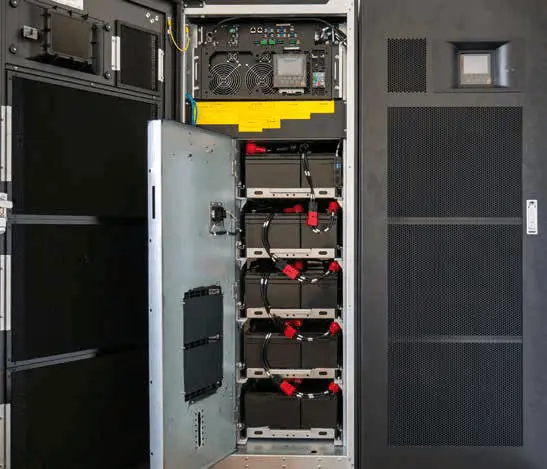
In today’s world, where only the innovative ones are able to lead the competition, Tescom has adopted the principle of offering new products and services to the market with “innovative” approaches. In recent years, the 3L (Three Level) topology, considered as the latest technology, has been developed in response to the increasing energy costs and the necessity of using highly efficient electrical and electronic devices. 3L products are those that reduces iron and copper losses to a lesser extent due to the lack of transformer usage as a result of the small sizes of materials used, for the purpose of ensuring high efficiency and environmentally friendly properties in terms of contribution to both the economy and nature. Also, our products with solar hybrid technology, with which we offer an economical and ecological power option, as well as our compact modular devices that allow 900 kVA power to fit into an area smaller than 2 m2, are just a few examples of innovative products that we have developed.
What are your objectives for the coming period?
In the near future, we plan to activate our central monitoring system, which will serve for Internet of Things and Industry 4.0 fields, to increase the quality of services we provide to our customers with our call center. In this regard, we have started a TUBITAK project where we aim to put related projects into operation.
Anything you want to add?
The past is always full of lessons, and the future is always full of worries. Tescom, which has a history long enough to learn lessons, will continue to be a leading company in its sector, with its solution-oriented strategies for a future that contains concerns.