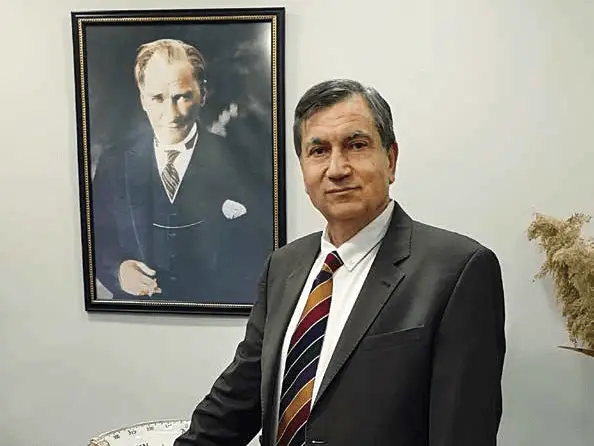
The Turkish Informatics Association, which aims to further spread the IT culture with its members from every class of society, continues to make significant contributions to the development of the sector with its 7 branches, 13 provincial representatives and the TBD-Genc (Youth) organization at universities. TBD, which has undertaken important works to develop and further strengthen the cyber security ecosystem, recently organized the Cyber Security Ecosystem Development Summit. We talked with TBD Chief Executive Officer Aydin Kolat about his activities, who stated that the development of R&D culture is very important for us to become a country that has a say in the global economy and produces technology.
Can you please introduce yourself?
I was born in 1952. After completing my doctoral studies in nuclear physics at ODTU Physics Department, I worked as a faculty member in the same department. I started working as a system specialist in 1983 at the IBM company, and then I worked as a manager at various levels for 17 years. After retiring from IBM in 2000, I started to work as InterAK General Manager, MNG Computer Assistant General Manager and Ankara Representative of the Informatics Foundation of Türkiye. I am currently serving as the General Manager of Verisis A.S. and the Chairman of the Executive Board of the Turkish Informatics Association. My membership in the TOBB Software Assembly and the R&D Evaluation and Audit Commission of the Ministry of Industry and Technology also continues. Recently, I have been trying to share my experience in digital transformation, issues of the software industry, qualified IT personnel, distant education, IT cities, disaster recovery and business continuity.
Can you tell us about the activities of the Turkish Informatics Association (TBD)?
The Turkish Informatics Association mainly works through the TBD Executive Committee and TBD Working Groups. The TBD Executive Board consists of 25 Executive Board members. In addition to our executive board, expert support is obtained from the Executive Sector Board, which consists of about 150 experts, during the realization of our projects. The Executive Board provides services with focus axes that change annually under different subject matters. We determine the topics we will work on each year at the end of a workshop we hold at TBD at the beginning of the year. In particular, we choose subject matters that can be beneficial for establishing the policies and strategies of our country. This year, based on the determined topics, 6 focus axes were defined, namely as the National Data Strategy and Policy Focus Axis, Digital Citizen Focus Axis, Cyber Security Focus Axis, National Policy and Strategy Determination Focus Axis, Digital Economy and Finance Focus Axis. The services we plan to implement this year will include these topics as a priority. We also actively support other projects carried out within TBD, such as the TBD Academy, TBD National Standards Platform and CEPIS (Council of European Professional Informatics Societies), which we are a member of. As TBD, we also organize events, in several regions of our country where we have branches, that host national and international participants in several fields such as cyber security, information technology law, Public and Private Sector Information Technology Employees (KAMU-BIB and BİMY), National Information Technology Congress, Digital Transformation Technologies and Information Technology Standards Summit, information technology and SMEs congresses, discussion and information meetings with various university students, tourism technology days, and technopark workshops, which have now become a tradition.
“We held the third Cyber Security Ecosystem Development Summit this year at BTK on February 20, 2020, organized by TBD in cooperation with BTK and the Ministry of Transport and Infrastructure.”
What are your goals as an association for the formation of Türkiye’s digital transformation ecosystem in a sustainable way?
We believe that in order for the digital transformation taking place all over the world to be realistically implemented in our country under today's conditions, the socio-cultural structure must be improved, the R&D culture must be popularized, local and national product development must be encouraged, and the education infrastructure must be completely reconsidered. For this purpose, we believe that the state, public, private sector, universities and NGOs should work together to create solutions. The “Digital Transformation in NGOs” project has started to be carried out with the Ministry of Interior General Directorate of Civil Society Relations. As TBD, we continue our works in cooperation with relevant institutions and organizations to spread similar transformations throughout the country and create an ecosystem between all stakeholders.
What should be done for further development of digital transformation in Türkiye? Which institutions and organizations are assigned to which kind of tasks?
Digital transformation needs to take place as a total movement together with the entire infrastructure of a society. This is naturally a long-term process. First of all, the country’s digital transformation policy and strategy should be defined and implemented. We believe that experienced NGOs should take an active role in all these processes, and as TBD, we are continuing our efforts to spread the country's strategies to a wider base in cooperation with these institutions.
I would also like to talk about cyber security. In some cases, it is necessary to take instant measures against threats in the digital world. What are your opinions on this?
As TBD, we consider training qualified human resources, ensuring compliance with standards, and updating incentive mechanisms according to existing needs in order to develop and strengthen the "Cyber Security Ecosystem". We also believe that the political will and legal framework for commercialization should be established as soon as possible and legal regulations should be made. The development of a sustainable cyber security ecosystem will also allow for increasing the cyber security capacity at national level and creating awareness at all levels of society. For this purpose, we held the third Cyber Security Ecosystem Development Summit this year at BTK on February 20, 2020, organized by TBD in cooperation with BTK and the Ministry of Transport and Infrastructure.
Can you tell us about the Cyber Security Summit, which you organized for the 3rd time this year?
At the 3rd Cyber Security Ecosystem Development Summit, we aimed to create a common sense with the participation of experts on Cyber Security Strategies in the Public Sector, Cyber Security in Digital Transformation: Artificial Intelligence and Blockchain, as well as Data Security in Globalization. Also, within the scope of our social responsibility project, we provided “Artificial Intelligence Shaping the Future” and “Cyber Bullying” trainings to 150 mid-school students.
A large number of successful start-ups were born from technocities in Türkiye. Many of them also have stories that inspire candidate entrepreneurs. Do you offer any support for such formations?
As TBD, we advocate that it is very important to develop R&D culture in order for us to have a say in the global economy and become a technology-producing country. In technocities, where R&D and innovation studies can be carried out intensively, the infrastructures necessary for the birth of successful start-ups are also offered. The thing at this point is that every good idea is considered in a short time without any investment or experience, without missing the fact that incorporation efforts may not always be successful. We continue to work with various technoparks and universities to ensure that original, innovative and competitive ideas emerge, that start-ups are born from them, and that they can enter the global economy, either alone or together with investors.
What kind of works are you doing to contribute to the production, development and upgrading of domestic software to international standards?
The efforts of “TBD Domestic National Software Working Group” for developing domestic software are of great importance for all sectors, especially the defense industry, in terms of reducing external dependency, being able to exist in global competition, as well as national security. Accordingly, we have organized a series of workshops and conferences on the development of domestic technology in recent years and have collected the overall results in a booklet and shared them with the relevant institutions. This year, in the light of the current developments in technology, we are preparing a new version of this booklet. We carry out studies with the participation of relevant NGOs, institutions and organizations, by evaluating the international standards in various workshops held within the TBD IT Standards Platform established within TBD. We believe that the know-how accumulation and competence of our software sector in accordance with “Software Development Standards” are at a high level. However, we also believe that we need to raise awareness in our sector and develop our own national standards regarding the applicable legislation on issues like “Cloud Computing”, “Data Management”, “Internet of Things”, “Cyber Security” and “Artificial Intelligence”. Therefore, we have intensified our works in the above-mentioned focus areas.

What would you like to say about your collaborations with R&D centers and universities?
In order for Türkiye to become a country that produces technological products, we attach importance to the fact that the industry has internalized the R&D culture and works in cooperation with universities and R&D centers. For this purpose, we organize workshops together with TGBD (Association of Technology Development Zones) to discuss how our technocities can function more efficiently and productively, how they can contribute more to the national economy, as well as share the results with the relevant authorities. We have planned a new workshop with wide participation in March 2020. On the other hand, we are working with the relevant authorities under the coordination of the TBD Executive Board and TBD Academy to prevent brain drain in our country and to create a national science and scientist training strategy. Also, we coordinate one-day talks at various universities to inform students about the IT sector and discuss technological developments together.
How has the coronavirus affected the IT sector? Could you share your predictions?
Due to the coronavirus pandemic, which affected the whole world, all the people suddenly found themselves in a situation of “living in a brand new world”. This new world order, about which we have a very little experience, has made us face a new process that even the most powerful states have difficulty controlling. If plans to protect shared common gains for global economic unity are not implemented, it is certain that the economic management framework established in the 20th century will gradually transform into a completely different path and form. Currently, the greatest means for people to sustain life is digital possibilities. These possibilities have become almost our only tool in every aspect of our daily life. In the big picture, information exchange in science and technology, negotiations between states, national and international commercial transactions are all carried out in this way. Countries are able to share their medical information and data, and exchange information in the fastest way possible under the current pandemic conditions. As individuals, we can access hundreds of services and information without going outside during these quarantine days. Probably, there has never been another period in the world when e-commerce has been used so intensively, especially in terms of meeting individual needs. Working from home was also an important option that could add strength to the economy during this period. Regardless of whether the economy is strong or not, all the countries will definitely experience a contraction in their usual order after this pandemic, no matter how well they manage their economies. The countries that face this process unprepared and with bad economic conditions will have to take more serious economic measures. After we get through this pandemic, there will be lessons that the whole world should take. This pandemic has proven to us how indispensable information technologies are, how flexible the R&D infrastructure, trained personnel infrastructure, the existing socio-cultural structure, academic studies, the 4th Industrial Revolution can be in manufacturing, and how vital domestic production is. All the experience that will be gained in this challenging process will increase the need for us, the information technologies sector. Information technology companies will also be successful at a global level at the rate of their readiness for digital transformation.
“The most important lesson we will take from the current crisis is that we realize that knowledge, science and technology are our best weapons.”
What will be the trends in your sector with the pandemic?
Although the IT sector is among the least affected sectors, there will still be many IT employees who have been unemployed. After the pandemic, many information technology companies that have lost business due to the problems in the global economy will enter into a new search and try to meet the need for qualified information technology staff in particular. This will create a new job market according to the current situation in the economy. While the companies are dealing with their daily expenses, they will also try to invest in promising new technologies. It would not be a wrong prediction to say that government support will be vital at this stage.
With government leadership and support, short and long term plans should be made together with NGOs and universities, and companies should be encouraged to contribute to domestic production by conducting R&D and design activities in line with these plans. In this way, information technologies can compete globally and qualified export can be increased. The most important lesson we will take from the current crisis is that we realize that knowledge, science and technology are our best weapons.