
FIELD APPLICATION CHIEF
Among the popular topics of today, the Internet of things (IoT), Industry 4.0, artificial intelligence (AI) and smart homes are the topics that almost all of us are involved in some way. I have touched on some of these topics in detail in my previous articles, and this and many other technology-based topics like this have one thing in common. This common point is so important that its absence means that the subject it is in does not actually exist. The name of this common point is “sensor technology”. Although we say that the Internet of Things is popular and the importance of sensor technology is increasing, the situation is actually the opposite. In other words, as the sensor technology advances, we can sense things better. And also we can control the things that we perceive better. The term “sensor” literally means a material that converts a physical size into an electrical signal. Examples of these include light, temperature, humidity, types of gases, distance, movement. This examples can be increased. Although we are talking about many types of sensors, in fact, the outputs of the sensors are of two types as “analog” and “digital”.
“Today, where autonomous control is advancing daily, the
sensor technologies are also diversifying, developing and are now in every field.”
Analog Sensors;
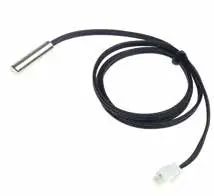
They are the sensors that take the physical quantities in nature on themselves and give voltage/current proportionally at the output. They generate an electrical signal at their output compared to the physical size at its input. Analog sensors do not carry out any other works other than detection, and converting the physical size that they are measuring into an electrical signal is their main function. In this way, the person using an analog sensor is aware that when they want to use a control mechanism, and operate with the corresponding analog signal.
Digital Sensors;
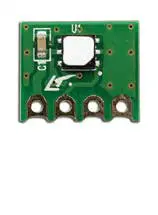
In digital sensors, just like in analog sensors, the physical quantities in nature are converted into an analog signal. However, this analog signal is not output. Instead, it is converted to digital, also known as a “binary system”, by using various electronic systems on top of the analog signal created. The system mentioned here is a communication array consisting of zeros and ones. The communication methods usually used here are the globally accepted and standardized I2C, SPI, Uart, CAN etc. communications. Analog and digital sensors offer both advantages and disadvantages compared to each other. Depending on the project to be carried out, analog or digital sensor can be selected according to the desired function. In this regard, it would be wrong to claim that an analog sensor or a digital sensor is good. To give an example, the first parameter to be sought in a system that will take action by making the fastest decision on the physical size it measures is the “response speed”. Accordingly, the products with the lowest response time are analog sensors. The installation control of the analog sensor and the resulting linking mechanism will require a lot of expertise, so it will slightly delay the completion time of the project. On the other hand, in an example where the completion time of the project is important, digital sensors are preferred as they can easily transfer the measured size to the output. Thus, a sensor mechanism can be installed, a measurement can be made and a decision mechanism can be established without doing any deep engineering works.
So, why do we need sensors?
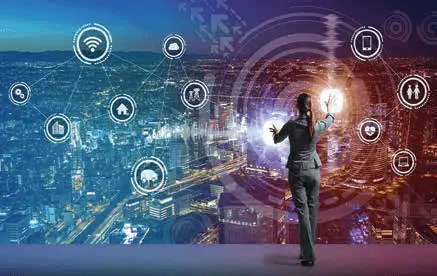
The answer to this question is quite simple. If there is something that needs to be controlled, it also needs to be measured/perceived. If you want to measure/detect something, this is where the sensor comes into play. Sensors are as important as the “sensory organs” in humans. Actually, it would be more correct to call them as the “sensory organs of electronic circuits”. We use so many sensors in our daily life without even realizing it. There are hundreds of sensors in the vehicles we use. With these sensors, we can access a lot of information and control a lot of things with this information. All the systems we call “automatic” such as automatic headlights, automatic transmission, automatic wipers, automatic dimming rear-view mirrors etc. contain a control mechanism. The information collector of this control mechanism is sensors. If your headlights turn on automatically when you enter a tunnel with your car, and turn off automatically when you exit the tunnel, this is done through a sensor running in the background. No matter what we tackle with today, like for instance the Internet of Things, Industry 4.0, artificial intelligence, robotics, space, or smart homes etc., sensors are always at the heart of the matter. To give a more detailed and application-based example:
Temperature Sensors:
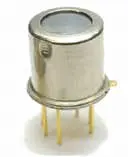
These sensors can be examined under two headings. One of them is the sensors that measure the ambient temperature, which are needed in almost every project. The other is the sensors that measure non-contact human temperature, which has increased intensively, especially after the pandemic. Where the ambient temperature is important, it is necessary to measure the temperature and operate the control mechanism. Therefore, a sensor can be selected according to the importance of temperature accuracy. To give an example for such systems, HopeRF’s TH10-coded product can measure the ambient temperature almost without any error and with a temperature sensitivity of 0.1C° and a humidity sensitivity of 1.5%Rh. On the other hand, in cases where the temperature of a non-contact surface is desired to be measured, such as those in a non-contact thermometer project, Excelitas' TPIS 1T 1086 L5.5 coded product can make contactless and accurate measurements from a very narrow angle of 5°. In both applications, an autonomous control is provided by installing automatic systems that will act according to the measured temperature result.
Distance Sensors;
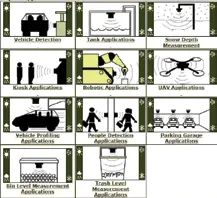
Although we think of a single type of sensor when we say distance sensor, different sensors are available depending on several variables such as the object to be measured, the environment to be measured, etc. In this regard, MaxBotix offers a wide variety of sensors with high accuracy. Examples of these include sensors with different technical features for many areas such as person detection, vehicle detection, liquid level measurement, snow depth measurement, robotic distance measurement, garbage depth measurement, etc. Accordingly, when it is desired to make a distance-dependent control, a solution can easily be offered. Distance can be detected and controlled depending on the application by using both digital and analog distance sensor.
Motion Sensors:
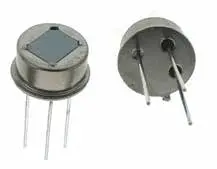
Motion sensors are among the sensors that we use frequently in our daily lives. It is also known as PIR sensor. It is offered with two or four windows based on pyroceramic. The number of windows used here is related to the direction of movement to be detected. Motion detection can be carried out easily by using the digital PYD1798 sensor produced by Excelitas, one of the largest global companies in the field of PIR sensors. The PYD1798, which offers two windows, can perfectly detect movements made in horizontal direction. Therefore, these and similar products are frequently used both in theft alarm systems and stair automation systems. The detection process starts in an analog way based on the movement and the analog signal is converted to digital by the digital filters and DSP mechanism developed by Excelitas, before being transmitted to the user. The user can also set up his own control mechanism by using this signal they receive. Just like starting the light action after detecting movement while moving on the stairs.
Pressure Sensors:
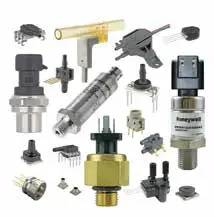
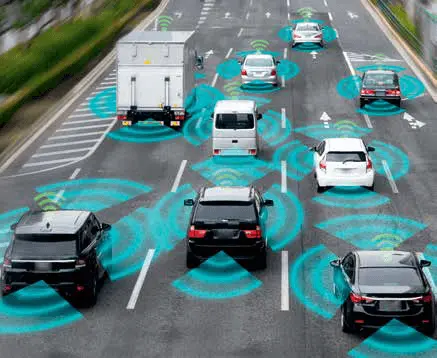
Pressure sensors are among the sensors that are used as a “must-have” in many applications. Therefore, several measurement methods are continuously emerging. The main ones are differential measurement, absolute measurement, gage measurement and wet-wet differential. In this regard, Honeywell’s pressure sensors can offer products to almost all sectors with many parameters such as different operating temperatures, measurement types, accuracy and precision, as well as temperature compensation and measuring range. Honeywell also manufactures air-flow sensors, current sensors, flow sensors, power sensors, gas sensors, temperature/humidity sensors, magnetic sensors, motion and positioning sensors, particle sensors, pressure sensors and speed sensors for several different fields. Depending on the user’s needs, each sensor group is divided into several parameters within itself. Just like it was written in a probability book, if we knew the speed of the coin leaving the finger, air resistance, the distance it flew into the air, etc. in a coin flip experiment, the probability of the coin coming up heads or tails would not be 50%. In fact, we could have known exactly what the result was. For this reason, if it is required to carry out a control and that the result of this control is correct and complete, the most important data required is the information about the area where the control will be carried out. The collection of this information is done entirely with sensors. Today, where autonomous control is advancing daily, the
sensor technologies are also diversifying, developing and are now in every field.