
LED TECHNOLOGIES SALES MANAGER
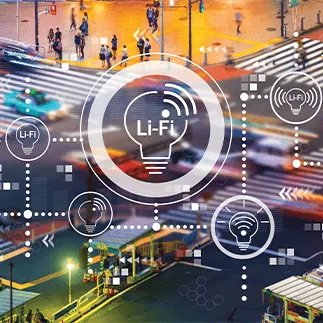
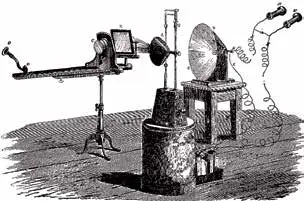
Li-Fi (Light Fidelity), in its simplest definition, refers to the technology of data exchange through a lighting device such as a LED bulb. In technical terms, on the other hand, it can be defined as “light-based Wi-Fi”, which can transmit information at high speeds over visible light, ultraviolet and infrared spectra instead of radio waves. When describing the history of the development of Li-Fi technology, we should also talk about the history of VLC (Visible Light Communication), i.e. the visible light communication technology, of which it benefits essentially. VLC, as the name stands, uses visible light for data transmission, and the basics of its technology can be traced back to the photophone invented by Alexander Graham Bell and his assistant Charles Sumner Tainter in 1880. Although the “photophone”, a device that wirelessly transmits speech using modulated light for the first time instead of modulated electrical signals, is not so popular, it is actually one of Bell’s most important inventions and has pioneered many optical communication technologies such as fiber optics and VLC. The first study for modern VLC was initiated at the Nakagawa Laboratories of Keio University in Japan. In a study on the idea of transmitting data via visible light through LED, Japanese researchers proposed the concept of communication via visible light in 2000. Using LED lights as a base station, the researchers simulated an indoor communication system that would use ceiling lighting as a means of transmission. As a result of intensive studies, they managed to create a high-speed communication technology that reached 100 Mbit/s in 2009. Concurrently, studies for the development of technology have started in many countries. However, the term Li-Fi was first used in 2011 by a German Professor Harald Haas, who has been studying VLC since 2006. In his speech, he envisioned a future in which data communication for laptop computers or other mobile devices was carried out via LED lighting in the room.
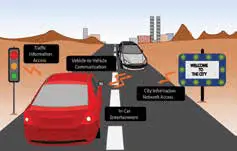
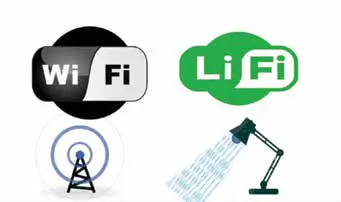
Li-Fi, as we mentioned earlier, is a technology for exchanging data through a lighting device. Therefore, at the heart of its technology are the LEDs with high brightness. When the LED is in “ON” position, the data “1” is transmitted, and when it switches to “OFF” position, the data “0” is transmitted. However, this transition occurs so quickly that the human eye cannot perceive it. In this respect, it can conceptually be considered as a very fast version of Morse code. At this point, the question of “What is the purpose or motivation of this technology when there is Wi-Fi, which is quite common and useful?” may come to mind. Wireless communication has become an indispensable phenomenon of our daily life now. Wi-Fi is everywhere and provides us with great comfort. On the other hand, global internet traffic doubles every 18 months, and the vast majority of it passes over wireless networks. Each year, more and more devices are starting to use wireless connection. Telecom operators are trying to roll out 5G to cope with this heavy data traffic but 5G cannot enter buildings as much as desired yet. The leading players of the Wi-Fi industry, on the other hand, are introducing Wi-Fi 6 to cope with this data traffic, by optimizing their limited spectrum allocations. As a result, the radio frequency spectrum used by Wi-Fi technology is rapidly being depleted, as the ever-increasing need for connected devices and higher speeds requires even more bandwidth. The effects of 5G and 6G, which are popular these days, on human health are still a topic of discussion. However, it seems that this situation is not sustainable forever. At this point, Li-Fi offers us a solution for preparing wireless networks for the future in order to meet the demands of tomorrow's world. With Li-Fi, it can use a spectrum 1000 times wider than the spectrum used for radio frequencies. Speeds of up to 100 times higher can be achieved compared to Wi-Fi's current top speed level of 5GHz. As “light” is used instead of radio waves, it allows for use in areas sensitive to electromagnetic interference, such as hospitals and airplane cabins. There is no license requirement. Millions of street lights around the world can easily be turned into Li-Fi access points.
“Just as Wi-Fi is a complementary technology for cellular data, Li-Fi is currently a complementary technology for Wi-Fi.”
The inability to pass through walls can be considered a disadvantage in terms of coverage. However, in terms of security, it provides as much security as a wired network against data theft. The 3-times lower latency compared to Wi-Fi makes it possible to develop and use applications such as augmented reality and virtual reality for larger areas. It requires less energy consumption for data transmission since only the light used for lighting purposes is used. At this point, the question of “What will happen when the lighting is off?” may come to mind. However, instead of completely turning off the fixture, reducing the light level to a level that still leaves the environment dark or using infrared offers a solution for this phenomenon. Li-Fi may seem like an alternative technology to Wi-Fi. However, just as Wi-Fi is a complementary technology for cellular data, Li-Fi is currently a complementary technology for Wi-Fi. It can be used independently or integrated with existing Wi-Fi networks in areas where many devices interact in the same area, in applications that require high security along with high speed such as machine-to-machine communication, in military facilities that require the highest level of security or in areas where the use of Wi-Fi will cause problems such as aircraft, hospitals, petrochemical plants. As a result, Li-Fi is feverishly preparing to enter our lives. Depending on the advantages or limitations it offers, it is difficult to say whether this will happen after 2 years or after 10 years. However, with the countless innovation and development potential it offers in many fields, the general prediction is that Li-Fi will become the dominant technology among other internet connection technologies, sooner or later. In short, Li-Fi is coming; get ready!