
LED TECHNOLOGIES SALES DIRECTOR
UV (ultraviolet) technology has been used for many years in structures such as hospitals, where liquids, surfaces, hygiene and cleanliness are critically important. UV technology, started with conventional lamps, has started to be replaced by UV LED technology in the last 10 years. The environmental effects of mercury contained in UV lamps and the fact that energy consumption is higher than LED technology, increases the use of UV LEDs. Design flexibility, compared to UV lamps, also greatly expands the areas of use. This technology was first used in devices used in dental treatment and counterfeit money detection applications. UV LEDs vary in areas of use according to their wavelengths, with short wavelengths used for sterilization, while long wavelengths are used in areas such as plant cultivation.

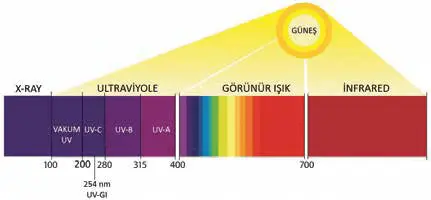
UV LEDs used in several fields are classified according to their varying wavelengths.
UV-A: LONG WAVELENGTH (315-400nm)
UV-B: MEDIUM WAVELENGTH (280-315nm)
UV-C: SHORT WAVELENGTH (100-280nm)
The fact that our country's and the world's agenda is focused on combating the coronavirus (COVID-19) outbreak has brought the usability of UV-C to the agenda.
“The fact that our country’s and the world’s agenda is focused on combating the coronavirus (COVID-19) outbreak has brought the usability of UV-C to the agenda.”
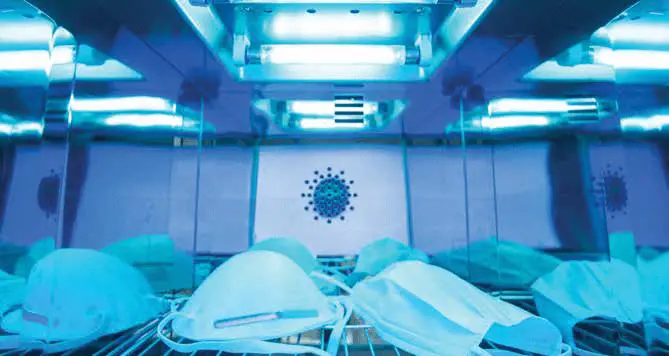
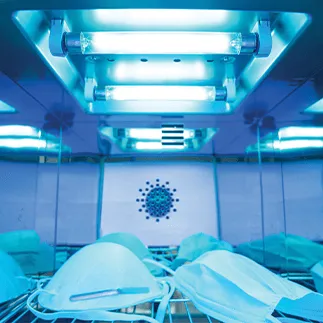
The tests carried out at Korea University showed that 99.9% sterilization against COVID-19 was achieved in 30 seconds. In addition to the airborne coronavirus, the products that we touch frequently, such as masks, money and phones, were also rapidly sterilized. Viruses are composed of RNA or DNA components. With UV-C technology, the changes can be made in the chemistry of viruses in the short wavelength range, preventing their proliferation. The transmission property of the virus also disappears. In this way, the rate of spread of the virus can be reduced. The importance of UV-C LEDs was proven once again with the coronavirus, one of the biggest epidemics affecting the whole world after World War II. In the fight against the virus, many projects using UV-C technology have been started. Many factors are taken into account in order for the developed projects to be viable.
The most important of these are the environment in which it will be used, as well as the duration and distances in which the sterilization process will be carried out. UV-C LEDs have a narrow viewing angle. In order for UV-C to be effective, the rays must reach every point in the area where it is used. It is possible for the rays to reach every point by making the right design for the right product. Choosing the right UV-C LED and making the right design is not as easy as it is in lighting. Following the design, various tests must be performed in the laboratory environment. Thanks to these tests, the end users can find out how long and under what conditions the product reaches the correct sterilization. “The fact that our country’s and the world’s agenda is focused on combating the coronavirus (COVID-19) outbreak has brought the usability of UV-C to the agenda.” The tests carried out at Korea University showed that 99.9% sterilization against COVID-19 was achieved in 30 seconds. In addition to the airborne coronavirus, the products that we touch frequently, such as masks, money and phones, were also rapidly sterilized. UV rays are also used against viruses. Another issue after the design of the module is the design of the product. UV-C rays that directly effect the human body cause sunburn. Long-term exposure to UV-C rays can have severe consequences that can lead to cell death, and even skin cancer. For this reason, the necessary measures should be taken according to the project to be carried out. Otherwise, even if the aim is to provide benefit and eliminate the effect of the virus, it may turn the situation into harm. As important as vaccine research against coronavirus is, it is equally important to expand the applicable areas of the sterilization process with UV-C LED and to ensure that solutions and products that will not harm human health are introduced with UV-C technology. The availability of a vaccine will only provide an effective defense against the coronavirus. However, taking into account that other types of viruses may find us in the future, expanding the use of UV-C LED technology and thus making sterilization procedures routine should also be one of our priorities.