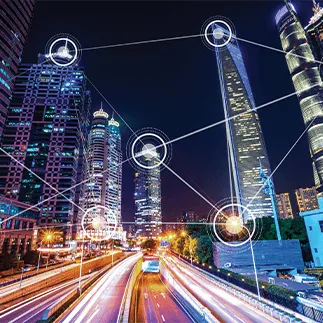

The world population, which is over 7 billion now, is expected to reach 9.7 billion by 2050. It is estimated that this rapid population growth will be experienced mostly in developing countries. In parallel, the urban population will also increase rapidly. New technologies that will make life easier in crowded cities will begin to be included in our lives. With the development of the Internet of Things (IoT), one of the concepts we explain most frequently is now “smart cities”. Smart cities aim to improve people's quality of life with technological tools and create more sustainable cities. A report published by Frost&Sullivan research company predicts that more than 26 cities will go smart by 2025. Cities that are under a huge pressure in many areas such as traffic, energy, garbage, infrastructure and municipal management will go smart by breaking away from the conventional management model. The most important point for smart cities to provide smart solutions is “data”. Smart cities, which usually use data and digital technologies to improve the quality of life, will support municipalities, businesses and citizens to make the right decisions with IoT technology and analyze the data in real time. People will enter the smart city ecosystem through their smartphones and mobile devices. Smartphones are now becoming “mobile” driver’s licenses and ID cards, speeding up access to urban and local government services.
The most important point for smart cities to provide smart solutions is “data”.
City Brain Reduces Traffic Problems
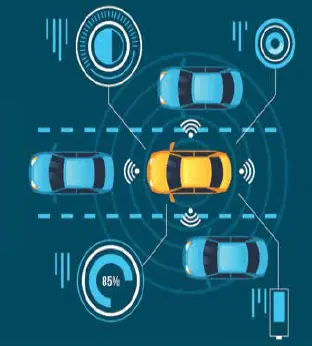
Traffic lights connected to the smart city system will eliminate the traffic problem, which is an important issue for big cities, by taking data from sensors and vehicles. Chinese technology giant Alibaba, which has come closest to finding a solution to reducing heavy traffic, has pushed Hangzhou, which was China’s fifth largest city in terms of traffic density until recently, down to fifty-seventh place, thanks to its AI-focused system. The system, called City Brain, detects the locations of passenger vehicles and public transport vehicles using data from traffic cameras and GPS. Thus, by analyzing the collected information, it reduces the traffic density during business hours. This system has significantly contributed to the shortening of the emergency response time, especially for the first aid vehicles.
Traffic lights connected to the smart city system will eliminate the traffic problem, which is an important issue for big cities, by taking data from sensors and vehicles.
Crimes and Disasters Can Be Prevented
Smart cities, which offer people comfort and quality of life, also focus on urban safety. The cameras located in the city not only help to reduce crime rates but also to find the criminals faster. Thanks to technological applications such as IoT used for security, the work of local governments and states has abated. City administrations transfer real-time information to the relevant institutions for ensuring public safety. Smart lighting systems designed to facilitate the lives of people and vehicles also allow law enforcement agencies to detect the crime scene by detecting the sound of guns and explosions with sound sensors installed in them. Drone technology, able to capture and transmit video, can provide information flow by entering a building that is on fire, allowing the fire department to intervene in the fire in the most appropriate ways.
Garbage Cans Are Getting Smarter
With smart garbage cans, waste management automatically sends data to companies and garbage collection can be scheduled according to a schedule when necessary. In other words, municipalities in smart cities will now be able to utilize a technology that will inform them that a garbage can has reached its full level, instead of emptying it every evening.
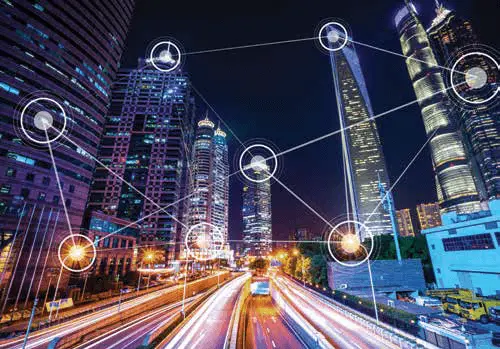
Smart cities, which offer people comfort and quality of life, also focus on urban safety.
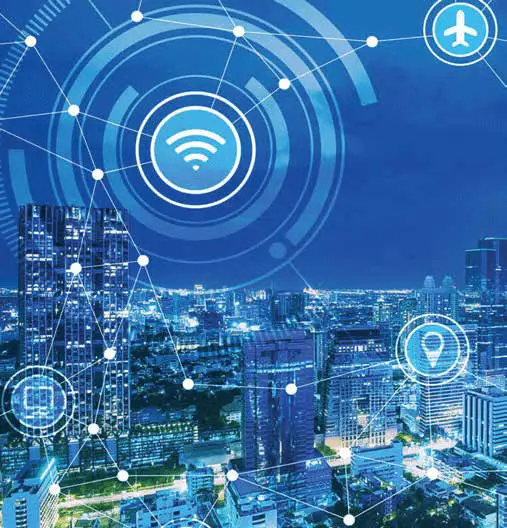
Examples from World Cities
With the smart street lights located in the U.S. state of San Francisco, the duration and amount of electricity consumed can be controlled. Thanks to this, San Francisco's energy savings have been increased by more than 130%. For the Santa Cruz police department, on the other hand, a smart network has been developed to intervene immediately and review the existing records at any time in case of a criminal incident in the city. Energy savings have also begun to be made with the power generation facilities added to buildings in Chicago. Smart technologies have started to be developed to reduce carbon dioxide production throughout the Spanish city of Barcelona. Special lines drawn on the highway in Oss, Netherlands, store solar energy and illuminate the road at night. Thus, energy savings are achieved and traffic accidents are reduced. In Tokyo, where carbon dioxide production is zero, high-efficiency devices are used for lighting, while how much heating the houses need is determined according to the weather.