
ELECTRONIC BOARDS MANAGER
Flex (flexible) printed circuit boards are printed circuit boards with a flexible structure, as the name suggests. They are thin and lightweight circuits suitable for use in small areas. They are preferred due to their ability to allow circuits to be designed to fit the electronic device or product, as opposed to designing the device to fit on a printed circuit board. They consist of strips of copper metal, usually conductive, sealed with an insulating dielectric material made of polyimide, polyester or FR4. The dielectric material helps the circuit to bend, prevent contamination and withstand high temperatures, protecting the circuit against oxidation or short circuits. Among the dielectric material types used, polyimide (PI) material is the most preferred, while polyester (PET) FR4 material is less common.
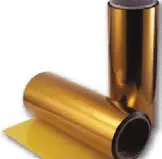
Polyimide: Films are the most preferred substrate film material in Flex PCBs. The most well-known brands are Kapton, Rogers, Dupont. Polyimide film thickness can vary widely, while in practice most flexible materials are available in thicknesses within the narrow range of 12 to 125 µm.
Polyester (PET): Flex PCB is a less preferred substrate material. It is cheaper than polyimide, offers high strength, high load-bearing capacity and low weight. PET-FPCs coated with a thin aluminum layer made solderable by plasma metalization can be equipped with components. PET is also transparent and can therefore be applied to glass surfaces.
Rigid - Flex PCBs: As the name suggests, these are the structures where rigid and flex (flexible) are PCBs are used together. Flexible areas offer vibration-free resistance and are flexible. Some of the solid areas are used to mount components. With these advantages, they offer designers the opportunity to design creative circuits.

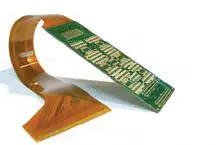
Although Flexible PCBs may seem expensive compared to Rigid PCBs in the first place, the total cost of projects where Flexible PCBs are used may be cheaper than the total cost of projects where Rigid PCBs are used. We can list the advantages and disadvantages of Flex PCBs compared to Rigid PCBs as follows.
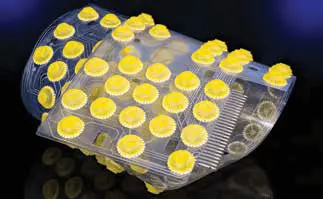
Advantages:
1-Packaging
2-Modern design freedom
3-Flexibility
4-High reliability and long-term performance
5-Excellent heat dissipation and solderability
Disadvantages;
1- They are more costly than rigid PCBs.
2- There may be a greater risk of damage during use.
3- More difficult assembly process
4- Difficulty of repair and reworking
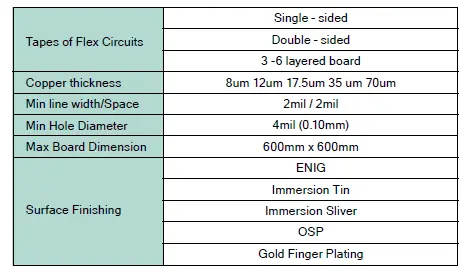
The general manufacturing limits are as follows.
Stiffeners For Flex PCBs
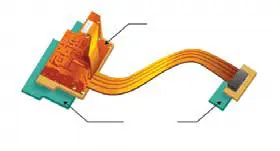
The parts added to the Flex PCB in order to keep the area where it is located in a hard-solid state are called “Stiffeners”. One of the purposes of this is to ensure that the Flex PCB can make a connector connection. These hard materials can be FR4, polyimide (PI), polyester (PET), stainless steel (SUS), and aluminum. Stiffener can be added to the desired surface as needed. Flexible PCBs offer many advantages, but it is difficult to add/solder components to these boards. By using a stiffener, a part of the board is made harder and it becomes easier to add/solder material to these hardened areas. PCB stiffeners are usually not an integrated part of Flex PCBs. They are only added to a certain part of the board.
Areas of use:
Military, transportation, medical, consumer electronics, automotive, aviation, communication, etc.