
R&D AND TECHNICAL SUPPORT ENGINEER
With the development of electronic device designs over the years, the use of processors in electronic boards has increased significantly. Most of the devices we use in our daily lives utilizes simple or complex processors. One of the most important hardware for processors is memory units. Processors store the software necessary for their operation in memory units, store the data that needs to be saved in this unit, and perform mathematical operations in these units as well. Memory products are basically divided into two groups as temporary memory and permanent memory. Permanent memory products are called flash and the data inside is not to be lost even if the device is de-energized. Their purpose of use is to record data. The temporary memory products, on the other hand, are called RAM. When the device is de-energized the data disappears as well. Its purpose of use is to perform the mathematical operations of the processor and store temporary data. RAM - Volatile Flash products are also called Non-Volatile. In simple processors these units are usually located inside, and external memory products are used when capacity and system requirements increase. In this article, we will talk more about external memory products.

First of all, when we talk about the structure of RAM products, the RAM products are structurally divided into two basic groups as Static RAM (SRAM) and Dynamic RAM (DRAM). SRAM’ use transistors to keep each bit of data in memory. DRAMs, on the other hand, use capacitors of very small sizes. SRAMs are much faster than DRAMs due to their structure transistors, the speed of DRAMs is slower due to the charging time of capacitors, the writing speed is lower than the reading speed as it takes more time to charge the capacitors in DRAMs than to discharge them. It is possible to read and write a single byte in SRAMs, while it is possible to write in block form in DRAMs. SRAMs take up more space as they contain more complex electronic circuits, so the memory density is lower than that of DRAMs. A DRAM of the same size can hold more data than SRAM. SRAMs consume more power than DRAMs due to their structure with transistors. SRAM is used internally, as the processors with a simple structure have a lower RAM requirement. Due to the fast processing power on PCs, SRAM is used in Cache Memories. In applications requiring high capacity, DRAM is used. In DRAMs, they are divided into groups within themselves. The most widely used of these are SDRAMs and DDR SDRAMs. SDRAM (Synchronous Dynamic Random Access Memory) can perform write and read operations in a fixed time, so it can work synchronously with the processor. For instance, when the processor is sending data at 100 MHz and the data reception speed of the SDRAM is 100 MHz, the processor recognizes that the SDRAM is ready to receive data when it sends the next data, which is called “synchronous DRAM”.
DDR SDRAM (Double Data Rate Synchronous Dynamic Random Access Memory) can receive data on both the rising and falling edge of the clock frequency, doubling the data transfer rate. There is a performance difference between DDR2, DDR3, DDR4 products, and data transfer speed increases as the technology further develops. RAM products can physically be in different forms, and small capacities are usually used on integrated electronic boards. As the capacity increases, more PCBs are available in module form. There are many DDR SDRAM integrations according to the capacity via this PCB module. By standardizing these PCB modules in PC products, they were named DDR2, DDR3, DDR4 modules.
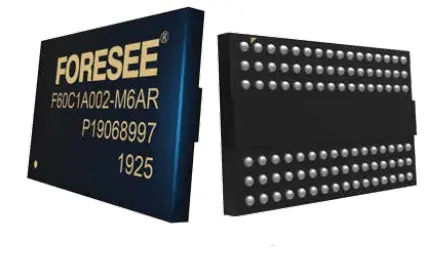
“Özdisan Elektronik aims to deliver a wide variety of memory products to its customers
with the distributorship agreement it has signed with Longsys.”
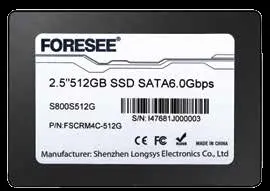
Non Volatile products initially appeared as ROMs (Read Only Memory). These products could only be programmed during manufacturing stage. Since this situation made software development difficult, EPROM (Erasable Programmable Read Only Memory) memories were developed. These memories could be written to electrically, but had to be exposed to ultraviolet light to be deleted. With the development of technology, EEPROM (Electrically Erasable And Programmable Read Only Memory) memories appeared. These products are products that can be deleted and written down electrically, and are still used today. The main advantage of EEPROM is that each memory byte can be written to and read from. However, since its capacity is very limited and its cost is high, its area of use has become quite narrow. Although there are many different types of flash today, the most commonly used structure is NOR and NAND Flash.

“Although there are many different types of flash today, the most commonly used structure is NOR and NAND Flash.” NOR Flash offers faster reading and more secure data storage than NAND Flash. However, its capacity is limited and it can have a maximum 2 GB memory.”
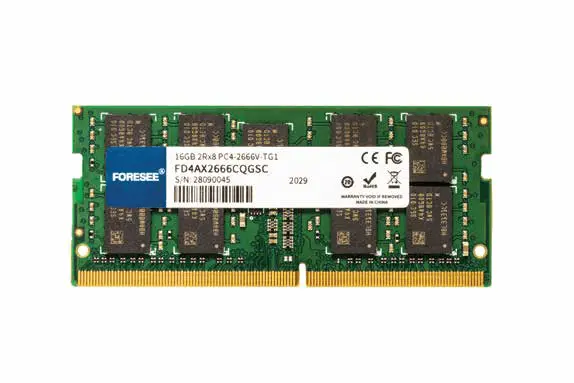
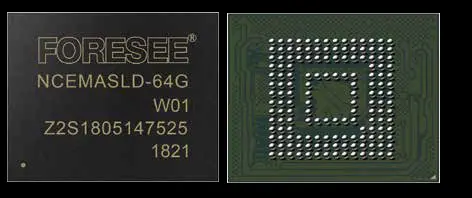
NOR Flash offers faster reading and more secure data storage than NAND Flash. However, its capacity is limited and it can have a maximum 2 GB memory.” NAND Flash is used over these values. The NAND Flash structure is the basis of many PC products that we know. NAND Flash products can be used directly with a processor, but due to the difficulties they bring in the application, they are usually used via some controls. Memory products containing NAND Flash are used in many different forms depending on their physical structure and the way they communicate, and the controls inside these devices allow the processor to communicate with NAND Flash. NAND Flash is used in removable PC products such as SSD hard disk, SD card, USB memory stick and embedded products such as eMMC, UFS, eMCP, SPI Flash. eMMC, on the other hand, is used as an integrated form on devices such as tablets, mobile phones and single board computers. Compared to SSD hard drive, its capacity is lower. eMCP Flash and RAM are the integrations that contain memory in a single package. SPI Flash products are used in systems that require low capacity, their speed is lower and they can be in NAND or NOR structure. One of the most important parameters related to Flash products is the writing/deleting lifetime. When it passes a certain cycle Flash Memory cells can lose their function. Some definitions have been developed to specify the lifetime of the flash memory. SLC (Single Level Cell), MLC (Multi-Level Cell), TLC (Triple-Level Cell). The lifetime of these products is SLC>MLC>TLC. Ozdisan Elektronik, with the distributorship agreement it has signed with Longsys , aims to deliver a wide variety of memory products to its customers. Longsys, founded in 1999, is one of the leading memory manufacturers in the world. Longsys offers embedded storage products under “Foresee” brand, and consumer storage products under “Lexar” brand.
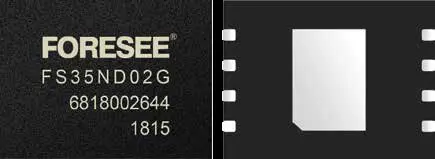
“RAM products are structurally divided into two main groups as static RAM (SRAM) and dynamic RAM (DRAM). SRAMs use transistors to store each bit of data in memory. DRAMs, on the other hand, use capacitors of very small sizes.”