
R&D and TECHNICAL SUPPORT SUPERVISOR
Energy consumption has become a very important parameter in today's technology. Especially battery-powered devices need to consume very low energy. Low battery consumption reduces the size of the batteries used in the devices and provides a longer usage time. Current consumption is an important factor in devices operating from the city network. Particularly, the power consumption of devices that are constantly connected to the network, such as refrigerators, affects energy efficiency, and devices with poor energy efficiency cause energy to be wasted. To design a low-power device, 3 important steps must be taken correctly.
● Choosing the right material
● Low power hardware design
● Low power software
Choosing the Right Material

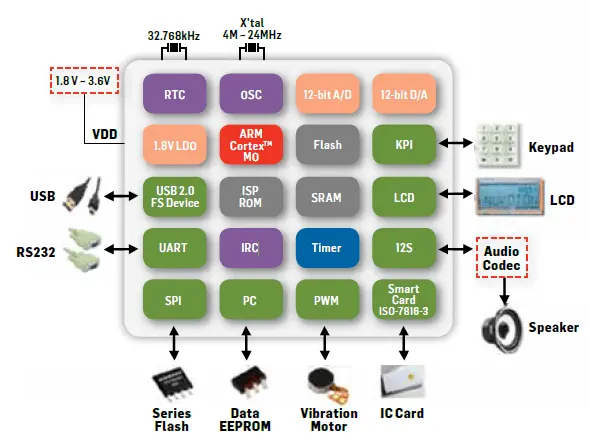
When choosing a material, it should be examined whether each material is suitable for low-power operation. In particular, the choice of processor greatly affects power consumption. Processors have different low-power modes and we will examine the features of these modes in more detail in the Software section. In battery applications, the minimum and maximum operating voltages of the processor and all materials used in the circuit should be taken into account. If the battery voltage is higher than the operating voltage of the processor and other materials, a voltage regulator (LDO) should be used and the current consumed by the LDO should be quite low. This value is expressed in datasheets as “quiescent current”, “ground current” or “Iss”. The fact that the LDO used is a “low dropout” one is also an important factor. Low dropout refers to the minimum difference between the input and output voltage of the LDO, and the fact that this difference is small allows the device to operate at lower voltages.
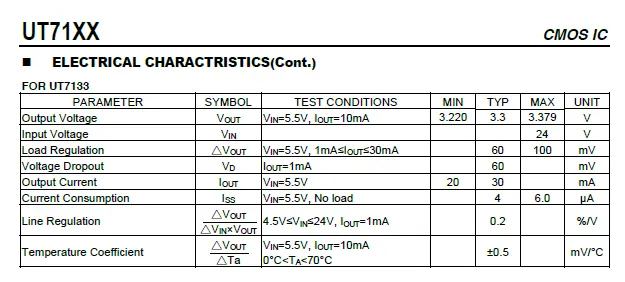
Another important factor for current consumption in processors is the current/frequency value, stated as uA/Mhz. The lower this value, the less power the device consumes in active mode. Nuvoton is among the best in low-power processor manufacturing. Low-power products, especially those with 8051 architecture, provide both low cost and low power consumption.
“When choosing a material, it should be examined whether each material is suitable for low-power operation.”
Low-Power Hardware Design
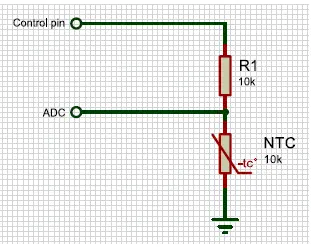
In low-power applications, although the processor operates at low power it is not possible to reduce power consumption unless the peripherals are connected correctly. The materials on the circuit should only become active when they are to be used, and should be turned off after the process is completed. For instance, when the temperature is to be read with NTC, the voltage should be supplied to the NTC via a pin, and after the reading is completed the pin should be pulled to 0V and the current passing through the NTC should be cut-off.
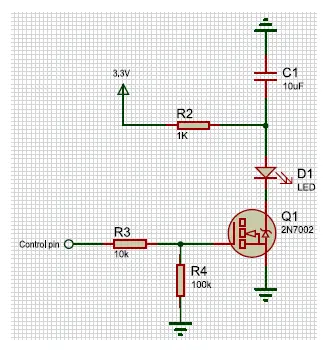
If instantaneous high current situations occur, the withdrawn current can be limited by forming a charging circuit with a resistor and capacitor for these circuits. When the processor enters power-down mode, the pin outputs should be left in a position where they will not draw current.
Low-Power Software
Nuvoton processors have 3 operating modes including RUN, IDLE and Power-Down, as well as 4 different crystal types as HXT, LXT, HIRC and LIRC. In RUN mode, all the CPU peripherals and the CPU clock are active. In this mode, the processor is at full performance and has the highest current consumption. In IDLE mode, only the CPU clock is turned off and all other peripheral hardware are active. In this mode, the processor’s switch to RUN mode is faster. In power-down mode, the processor has the lowest current consumption.
“Nuvoton processors have 3 operating modes including RUN, IDLE and Power-Down, as well as 4 different crystal types as HXT, LXT, HIRC and LIRC.”
Only the units that need to work in sleep mode are left on and other units need to be turned off so that they do not consume current. If all hardware are turned off, the current consumption drops below 1uA on ML51 series processors, in which case the processor can only be woken up by External interrupt pin. According to the operating principle of the device, one of these modes should be selected. If the device wakes up at certain times and needs to go back to sleep mode after completing the necessary operations, WKT (wake up timer) can be used. When the specified time expires, the processor wakes up and switches to RUN mode, turns on the necessary peripherals, and switches to power down mode by turning off the peripherals again once the operation is finished.
The crystal selected to operate the processor affects the current consumption. HXT refers to high frequency external crystal and can be 4 MHz or above. LXT refers to the external crystal of 10 kHz or 32.768 kHz. When it is 32.768 kHz, on the other hand,
it can also be used as a clock counter. HIRC refers to the high-speed internal crystal and may differ according to the selected processor. It is used in RUN mode. LIRC refers to the low-speed internal crystal. It can be 10kHz and 32.768kHz. It is used in low-power mode. Low-power mode current values may differ in each processor. The values given in the datasheet of the processor to be used should be examined in detail, unused hardware should be turned off, and operations in RUN mode should be completed as soon as possible.