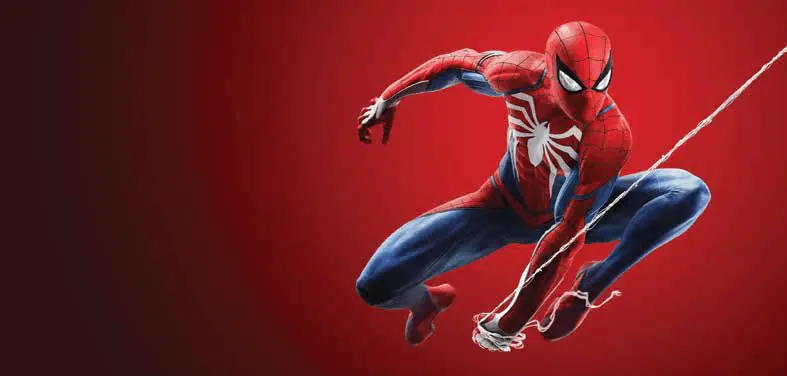
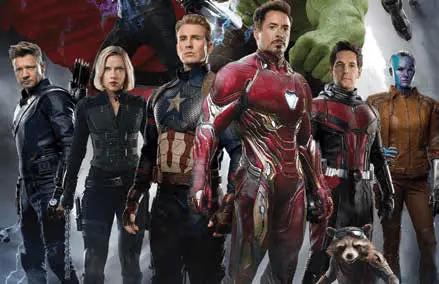
An adventure that began in 1896. When the Lumiere brothers showed the Train Station Entrance (1896) for the first time in a cinema hall, they did not think that the cinema would continue to exist for a long time. But the time has proved them wrong. There have been countless names that have contributed to this adventure started by the Lumiere brothers. Georges Melies, D.W. Griffith, Edward S. Porter, Sergei Eisenstein, Vsevolod Pudovkin, Alexander Dovzhenko, Rene Clair, Jean Renoir, Jean Vigo, Luis Bunuel and many others... Countless directors have made unique contributions to the survival of cinema both artistically and technically, and numerous people influenced by these names have spent their time developing this art in order to produce new works. This year, it is the 125th of cinema. Although it is the newest branch of art, it is an undeniable fact that cinema is more popular and easily consumable today, compared to other branches of art. However, with the COVID-19 pandemic, which began at the end of 2019 and defined as a ‘pandemic’ by the World Health Organization in March 2020, most people have not even been able to step into movie theaters for more than a year (World Health Organization, 2020). People who spend most of their time at home and outside of workplaces started to use various digital media platforms more intensively and consumed more content daily. Netflix, Amazon Prime Video, Hulu, MUBI, Disney+, Apple TV+, HBO Max, YouTube Premium, The Criterion Channel and many other platforms have gained millions of new subscribers. Although this may seem normal to many people, the idea that the digital media platforms will replace movie theaters after the COVID-19 pandemic is over has become a common opinion. The reason I want to write this article in June 2021 is of course not to denigrate digital media platforms and call on people to watch movies in movie theaters. In any case, it would be absurd to do this under pandemic conditions, and my intention is to look for an answer to a question that has been discussed for years. Martin Scorsese, the director of films such as Taxi Driver (1976), Raging Bull (1980), Goodfellas (1990), The Departed (2006), Shutter Island (2010), The Wolf of Wall Street (2013) and The Irishman (2019), compared Marvel films to amusement parks in an interview in October 2019 and stated that these films are not examples of cinema (Sharf 2019). After this widely discussed comment, some people expressed Scorsese's disdain for Marvel films. But, did Scorsese really underestimate the Marvel movies with his comment? Or, were there some other reasons behind making this comment? Those who follow know that Scorsese has made countless short and feature films in his nearly sixty-year film career. However, he has always managed to adapt himself to the innovations in cinema. He has made unique contributions to cinema by pioneering in many issues for both his own age group and young filmmakers. But no one had heard such a critical statement about cinema from Scorsese for many years. Although this comment may seem strange to some people, Scorsese's intention was not to disparage Marvel films. In fact, Emma Tillinger Koskoff, who has produced some of Scorsese’s films, had produced Joker (2019), which received eleven nominations at the Oscars, including Best Picture, and won two awards. Above all, Scorsese was among the producers of the Joker film at the very beginning, but later gave up on producing the film (Aquilina 2019). Scorsese, who expressed that he had been thinking about the Joker film for four years, underlined that he found the resulting film very successful (Aquilina 2019). However, Scorsese, who opposed the design of the Joker character as a comic-book character, thought that he should be deepened as a movie character, and for this reason he voluntarily left the film's production staff (Aquilina 2019).
But, was that the only reason? Dis Scorsese criticize Marvel movies only for this reason? Although I said at the beginning of the second paragraph that I would not disparage digital media platforms, I would like to note that I will criticize some digital media platforms negatively for the rest of my article. Scorsese has mentioned in part of his article “Maestro Federico Fellini and the Lost Magic of Cinema (2021)” that many digital media platforms are based on algorithms and what negative consequences this may have for the audience (Scorsese 2021). For example, when you subscribe to a platform like Netflix, the first movies that appear are the most watched movies, and you can see that the movies and series that Netflix has invested in the most are presented to you as “recommendations”. If you have made a choice other than the movies that were offered to you as suggestions in the first place (when you don’t have a movie in your mind that you would especially prefer), you can be sure that you have become a member of that platform in order to explore the content within the digital media platform that you are a member of. However, everyone who is a member of Netflix and its derivative digital media platforms takes into account the movie recommendations offered to them by algorithms as a priority after some point, and unfortunately cannot see movies other than a certain genre in the recommendation lists. This leads to the evaluation of the films presented to the audience as a content rather than a film and causes the films on such digital media platforms to be seen no different from “any” video produced. However, platforms such as MUBI and The Criterion Channel offer their viewers the opportunity to explore both new and old content regularly on the platform with a large number of different curations they have developed, while at the same time preventing one movie from being much more visible than the other. For instance, MUBI Türkiye shares a movie for its audience every day and gives its audience a thirty-day period to watch the ‘movie of the day’ that it shares. However, it publishes separate selections for films by directors such as Wong Kar Wai, JimJarmusch, Eric Rohmer, Nuri Bilge Ceylan, Sergey Loznitsa, Agnes Varda, François Truffaut, Krzysztof Kieslowski, Robert Bresson, Abbas Kiarostami, Alejandro Jodorowsky and Chris Marker on its platform.
Instead of answering the question ‘Is Cinema Dying?’ with ‘Cinema is already dead, long live new cinema!’, it seems more logical to answer that cinema, like everything else in the universe, is mortal and will die one day.
In addition, the platform, which offers curations specific to different country cinemas, historical periods, festivals, genres and themes, reminds its audience that what they are watching is a movie rather than a content, and makes it possible for its audience to discover new films by regularly adding new curations to its platform. Looking at the previous two paragraphs, one may think that I am vilifying Netflix and advertising MUBI in some way. However, the main reason why I have included platforms such as Netflix and MUBI as examples is because both platforms are the media that represent the future of cinema. As a matter of fact, although I am not an active member of both media as of June 2021 when I wrote the article, it is worth noting that I have previously been a member of both platforms at different periods. Although Scorsese has already praised the curation approach of MUBI, The Criterion Channel and TCM in his article “Maestro – Federico Fellini and the Lost Magic of Cinema”, he also reminds that Netflix provided him with the necessary budget for his Irish film when he could not get enough support from Hollywood studios, so he was able to shoot his film and present it to the audience's liking (Scorsese 2021). The main reasons underlying Scorsese’s concern, who cares about the existence of digital media platforms, are that he thinks that some popular movies (including Marvel movies) will dominate the cinema sector even more intensely both in Hollywood and around the world, that the value given to alternative works will decrease and face the risk of extinction and that art and the artists are likely to lose their importance due to platforms that use algorithms, such as Netflix. Why else would he, in a second interview about 3 weeks after the one in which he criticized Marvel films, talk about Marvel films representing a “new art form”? (Gemmill 2019)
Instead of answering the question ‘Is Cinema Dying?’ with ‘Cinema is already dead, long live new cinema!’, it seems more logical to answer that cinema, like everything else in the universe, is mortal and will die one day. I recognize people feeling pessimistic about the future of art and cinema due to technological developments and the fact that the world we live in is getting faster daily, which I actually like this, and I believe that some of the directors and films I love will not be valued as much in the future as they used to be. However, it should be remembered that today, for many directors, screenwriters and producers who have signed on to popular films, including Marvel films, certain art films continue to serve as a basic resource. Therefore, I do not think that the main struggle that cinema enthusiasts should have is related to movie theaters, digital media platforms, popular movies and art films. Contrary, their existence will be positive for the future of cinema, but cinema enthusiasts need to remind the owners of digital media platforms that will guide the future of cinema that the movies are different from other content that they encounter on internet. Only this way the need for curations can be understood, and people can say with peace of mind, ‘Cinema is alive, long live cinema!’
Everyone who is a member of Netflix and its derivative digital media platforms takes into account the movie recommendations offered to them by algorithms as a priority after some point, and unfortunately cannot see movies other than a certain genre in the recommendation lists.

References:
Aquilina, Tyler. 2019. “Martin Scorsese explains why he opted out of producing Joker, addresses Marvel comments.” Entertainment Weekly. November 4. https://ew.com/movies/2019/11/04/martinscorsese-explains-why-opted-outproducing-joker/.
World Health Organization. 2020. “WHO Director-General’s opening remarks at the media briefing on COVID-19 – 11 March 2020.” World Health Organization. March 11. https://www.who.int/director-general/speeches/detail/who-director-general-sopening-remarks-at-the media-briefing-oncovid- 19—11-march-2020.
Gemmill, Allie. 2019. “Martin Scorsese Can’t Stop Talking About Marvel Movies, Now Says “They’re a New Art Form”.”Collider. October 27. https://collider.com/martin-scorsese-marvelmovies-theyre-anew-art-form/.
Scorsese, Martin. 2021. “Il Maestro:Federico Fellini and the Lost Magic of Cinema.” Harper's Magazine. March. https://harpers.org/archive/2021/03/il-maestrofederico-fellini-martin-scorsese/.
Sharf, Zack. 2019. “Martin Scorsese Compares Marvel Movies to Theme Parks: ‘That's Not Cinema’.” IndieWire. October 4. https://www.indiewire.com/2019/10/martinscorsese-marvel-movies-notcinematheme-parks-1202178747/.