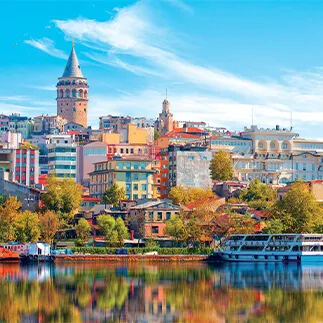
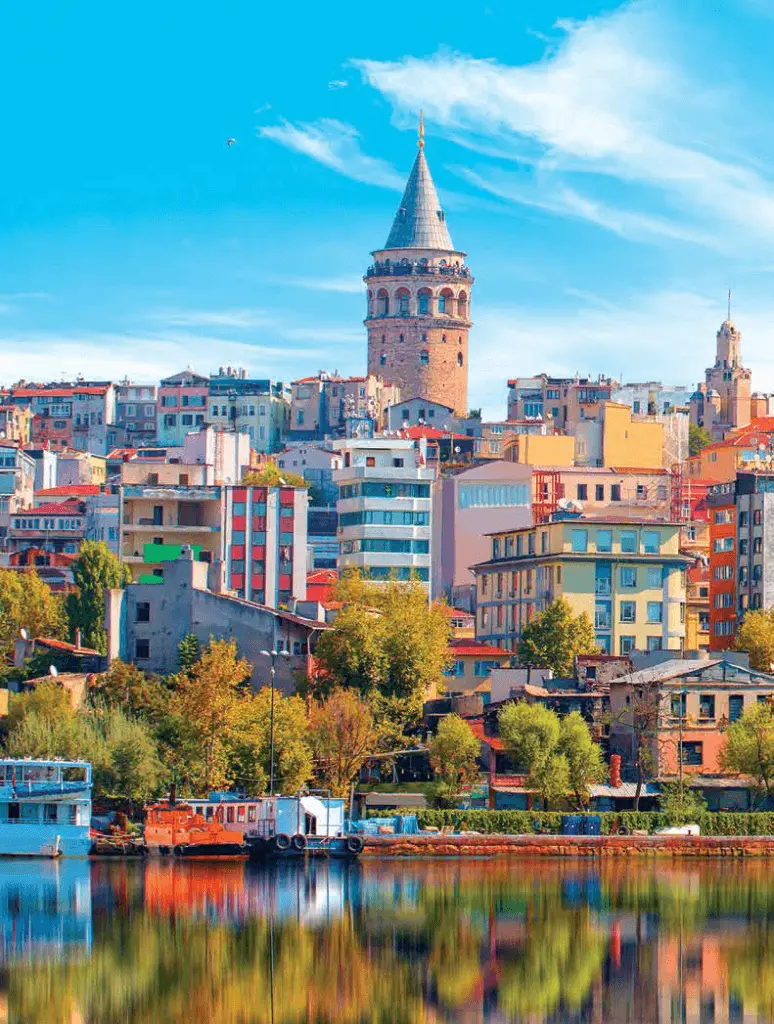
Galata, which is actually a traditional “mosaic mirror” of culture, has long maintained its characteristic of being a colorful region throughout history despite many differences in religion, language, race and social class among its residents. However, the multicultural structure formed in the past has caused the region to undergo various changes in time. Galata Tower, which has been overlooking Istanbul for hundreds of years with its imposing structure, is one of the first structures that come to mind when it comes to Istanbul. Let’s explore the unknown aspects of this magical structure that offers visitors the privilege of watching the unique view of Istanbul and the Galata region, which welcomes thousands of local and foreign visitors annually.
Galata during the Roman and Genoese Periods
During the Roman period, the Galata region, which was recorded as the 13th of the 14 neighborhoods of Istanbul, was divided into several neighborhoods within itself. Although it is not known at what date the first settlement here began, it is thought that it was before the Romans. The sources about the region, which was also considered to be of great importance at that time, it is mentioned as the place where Constantine the Great wanted to be buried after his death in the 4th century. In the 6th century, Justinian, one of the Roman emperors, has reorganized Galata. In the 13th century, on the other hand, a Genoese colony was established here and the region became an autonomous region under the control of the Roman Empire. Then, with the arrival of the Venetians in the region, commercial milestones were achieved through the ports. The Genoese, whose arrival date to Galata coincides with the period when Rome was weakened, surrounded the region with walls. Although they had to demolish some of the walls later, the Genoese did not step back, and built several buildings that are far from each other. They also erected the Galata Tower, one of the most beautiful structures of Istanbul today, which they named the Jesus Tower, on the highest place of the precious region for observation purposes.
The Galata region was divided into several neighborhoods within itself. Although it is not known at what date the first settlement here began, it is thought that it was before the Romans.
Galata Region during the Ottoman Period
After the conquest of Istanbul in 1453, the Genoese maintained their trade while also protecting their settlement rights here. Although the Genoese and Venetians handed over the region to Fatih Sultan Mehmet after the conquest of Istanbul, the Ottomans kept their distance from Galata both as a state and as citizens until the 1800s. According to researches, the reason for this was that 80 percent of the people of the region were Christians in the 1600s. In the following years, the region was divided into settlements within itself, including 70 Greek, 18 Muslim, 3 Frankish and 1 Jewish neighborhoods.
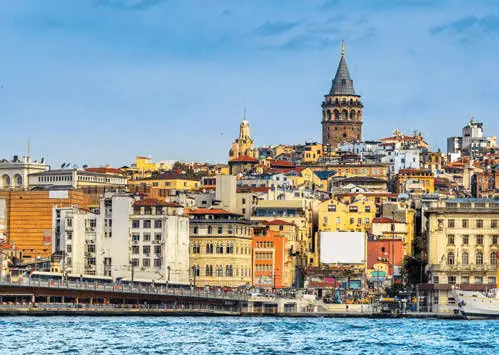
Although the Genoese and Venetians handed over the region to Fatih Sultan Mehmet after the conquest of Istanbul in 1453, they retained their rights to settle and trade there.
The Historical Galata Tower
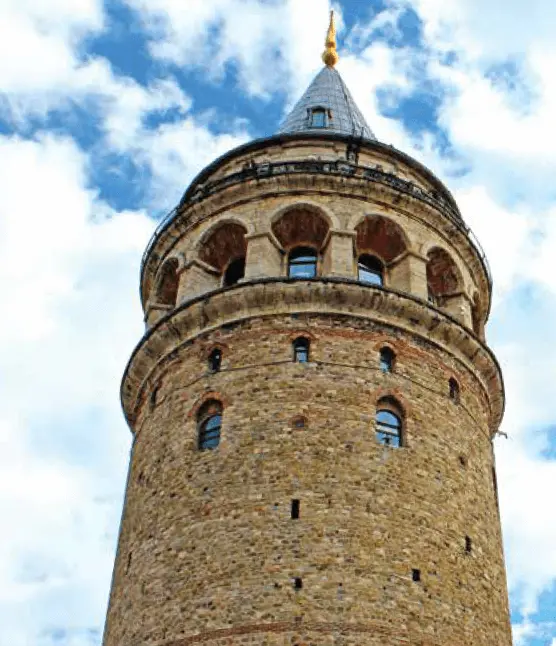
The tower, built by the Byzantine Emperor Anastasius in 507 as a Lighthouse Tower, suffered a great destruction due to a fire during the Crusades, and was rebuilt by the Genoese in 1348 under the name of “the Jesus Tower”. Therefore, considering the current state of the tower, the year 1348 can be accepted as the date of construction. This structure, which the Genoese used for defense for a long time, came under Ottoman rule in 1453. In 1509, the tower suffered serious damage in an earthquake that the residents of Istanbul called the “Little Apocalypse”. The building, which was repaired by Hayrettin, one of the leading architects of the period, was turned into a prison during the reign of Suleyman the Magnificent. The prisoners working at Kasimpasa shipyard have been kept here for a while. The works that gave the Galata Tower its current appearance were carried out during the reign of Mahmud II, and the structure was opened to tourism in 1967. Galata Tower, which adds a mysterious mood to the skies of Istanbul with its hectic crowd, is located between Tunnel and Karakoy. The tower, one of the historical buildings of Istanbul, has a height of 69.90 meters and a weight of approximately 10 thousand tons.
Hezarfen Ahmed Celebi's Flight from Galata Tower
Hezarfen Ahmed Celebi, who lived in the 17th century, put his “flying plan” into action during the reign of Murat IV, who reigned between 1623-1640. Known among the public as “Hezarfen” ( meaning “Who knows all sciences”) due to his vast knowledge, Celebi made artificial wings and, on a southwester Istanbul morning in 1632, before the curious gazes of the people of Istanbul, he threw herself into the void from the Galata Tower with the help of these artificial wings. Taking advantage of southwester, Celebi traveled a distance of 3,358 meters and landed on Uskudar.
The Story of Galata Fortress
The Galata Fortress, which were used as part of the Galata Wall during the Byzantine and Genoese periods for the purpose of defending the city, are mostly destroyed today. The Genoese, who remained neutral during the conquest of Istanbul, hoped that the region would remain theirs after the conquest. However, the presence of such a powerful fortress belonging to Westerners in Istanbul disturbed Fatih Sultan Mehmet and he has destructed a large part of these walls, which were also called the “Christos Fortress”.
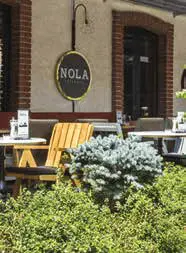
A restaurant that embraces history: Nola Galata Istanbul
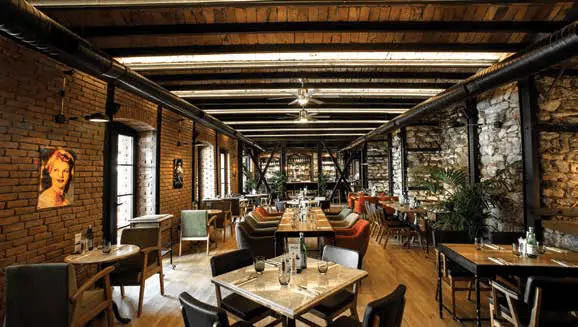
Galata is a complete point of attraction not only with its tower, but also with the places it hosts. Nola Galata Istanbul, which opened in August 2015, is one of these places. Significant investments have been made for this historical building, for which it took approximately four years to even obtain a restaurant permit, to take its current form from a derelict state. The building where Nola Galata Istanbul Restaurant is located today was used as a dormitory and guest house by the Sirs (Freres) who worked at the College Des Freres St. Pierre School. This building, which was built at the beginning of the 1900s as the other Sirs dormitory were not sufficient, was used in this way until 1935. The building was sold after 1935 and operated as a combat boots factory until 1962. In its place, Yordan Usta's Furniture Workshop, which was a source of inspiration for many famous names in Türkiye, was opened and continued its activities until the late 1990s. The building, renovated in 2010 to preserve its original structure, continues to operate as Nola Galata Istanbul Restaurant today. Nola, which has a capacity of 250 people, consists of two floors with high ceilings and spacious seating areas. The upper floor of the venue, called Nolart, has a capacity of 60 people. Cultural events such as painting exhibitions and live music performances are organized in Nolart. Nola Galata Istanbul, whose menu concept consists of a mix of flavors from France, Italy, South Africa and Turkish cuisine, is considered a “gourmet factory”. All the recipes on the menu are prepared with original recipes of the related kitchen to which they belong. Of course, not only the recipes, but almost all of the ingredients are supplied from their original locations.