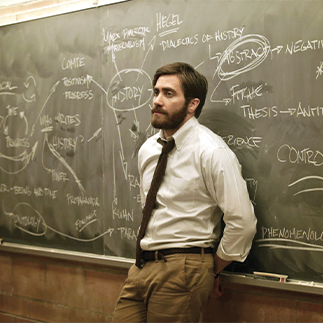
Jonas Mekas, who is considered the ‘godfather’ of American Avant-Garde Cinema, defines the history of cinema in the last paragraph of his article titled ‘Manifesto Against 100 Years of Cinema’ (1996), which he wrote in honor of the 100th anniversary of cinema, as below: “The real history of cinema is an invisible history. The history of friends coming together and doing what they love. For us, cinema begins with the sound that the projector makes every time it starts working, or every time our cameras start working. With the sound of our cameras starting to work, our hearts leap towards our friends” (Mekas, 2008). Countless short, medium and feature films have been produced in the 125-year history of cinema. Some films have been forgotten over time, while some films have reached the cult level over the years. Although some pioneering works that guide cinema continue to hold an important place for many filmmakers, unfortunately they have not been recognized by a wide audience. Inspired by these lines, which symbolize the "invisible history" of cinema, as Mekas puts it, and explain how amateurism plays a role in the emergence of creativity, I'd like to introduce you to five experimental films that have been left behind in the dusty shelves of history, which I believe everyone should watch at least once in their lifetime. If you're ready, let's get started!
Breakwater (1962)
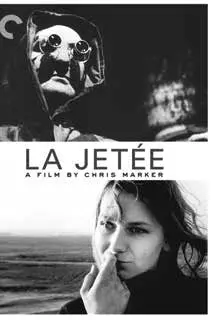
Jean-Luc Godard, François Truffaut, Eric Rohmer, Claude Chabrol and Jacques Rivette are the names that come to many people's minds when they talk about the French New Wave. However, apart from these names who wrote film reviews in Cahiers du Cinéma magazine in the 1950s, Chris Marker is one of the directors who influenced this trend in different ways. Among around seventy films that Marker, who was also a photographer, directed throughout his career, Breakwater (1962) is the product of a genius work that can still be considered innovative today. Depicting the story of a bunch of people living underground in Paris, which was devastated by World War III, the movie tells the story of a man with vivid pre-war childhood memories who travels back in time and confronts an event from his childhood that he cannot forget. The Breakwater, which entirely consists of photographs and external audio narration, rejects the aesthetic judgments that exist about cinema. However, in order to show how cinema is intertwined with the art of photography (contrary to what is claimed), it creates “cinematic moments” (Film Lovers, 2019) through photographs and enables the re-opening of some of the stereotypical ideas about the art of cinema to discussion. For this reason, Breakwater is considered one of the most original works in the history of cinema and is also considered one of the pioneers of the science fiction genre.
Koyaanisqatsi (1982)
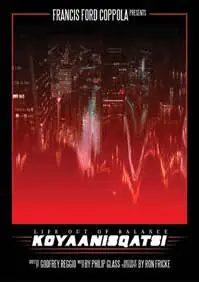
Unsure of how to use the $40,000 budget left over from a media campaign in the early 1970s, Godfrey Reggio, at the insistence of his friend Ron Fricke, allocated the money for a film production and began filming with Fricke in St. Louis, Missouri, in 1975 to produce a one-hour film without a script. Koyaanisqatsi, which was completed in seven years including the post-production process, turned into a classic shortly after its release and inspired many filmmakers from Christopher Nolan to the Wachowski Brothers, or David Fincher to Andrey Zvyagintsev. The film, consisting of a combination of images and music without any narrator, reveals the contradictions between nature and modern life, while also questioning the meaning of life. However, while photographing the injustice and inequality in the world, it also emphasizes that human life has spiraled out of control as a result of the fact that technology is involved in our lives more intensively than it should be, and calls on people to get rid of the illusion they are in. With the fascinating cinematography by Ron Fricke and the magnificent music by Philip Glass, Koyaanisqatsi can be considered an example of ‘pure cinema’. However, one of the main reasons behind the fact that the film is so aesthetically satisfying is that it functions as a “mirror held up to the face of humanity” (eg, 2009). In addition, although it has been almost 40 years since the gala of the movie, the fact that Philip Glass is performing the musics of the movie live in different countries is actually a proof of how the movie has become a cult work over time.

The Gap (2009)
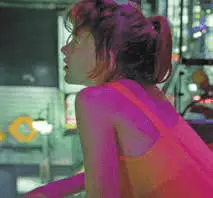
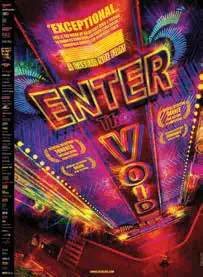
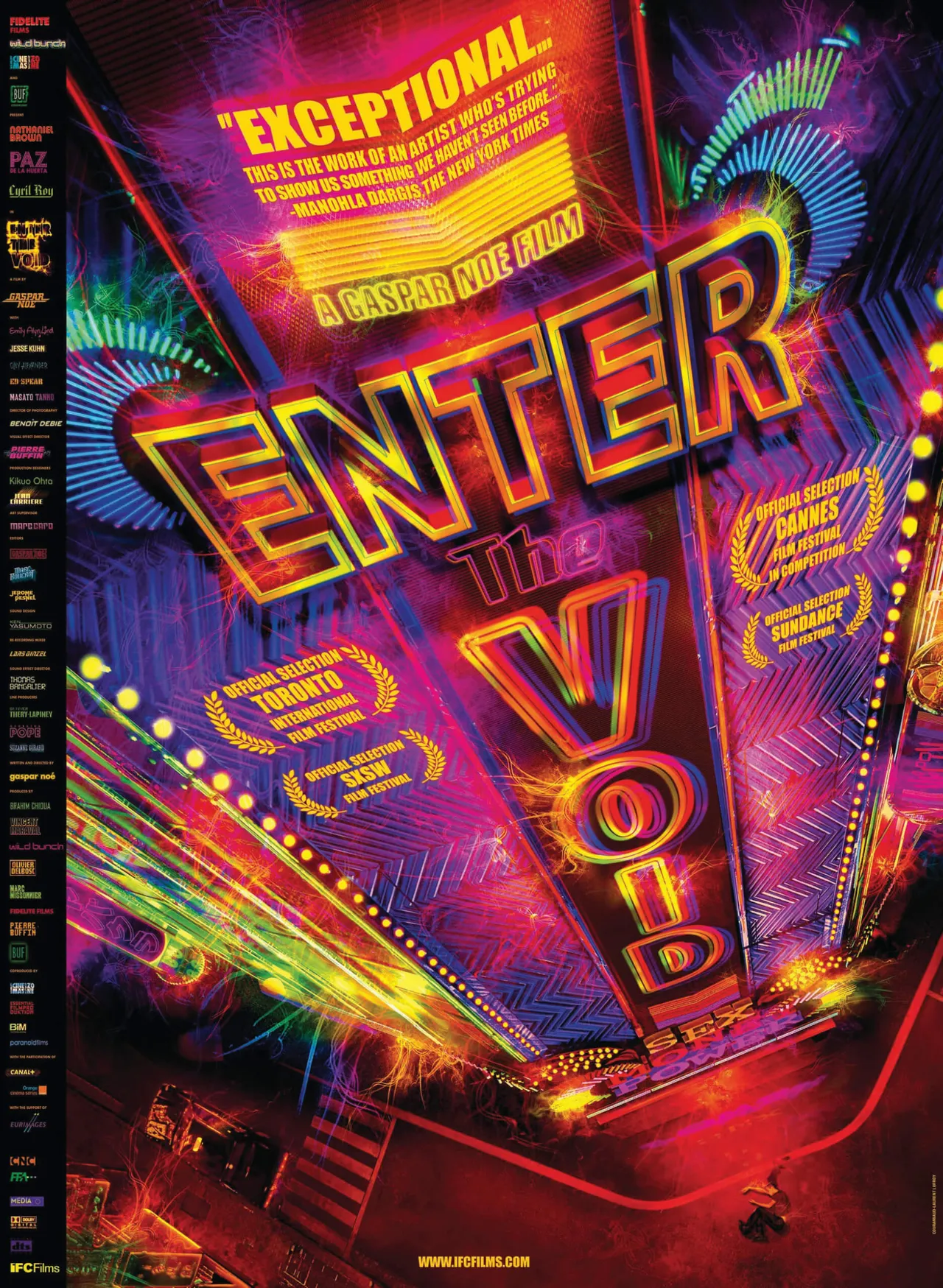
Movie critic James Quandt, while listing the movies of French directors that could be described as ‘aggressive’ in the early 21st century, defined the films in his collection under the title of ‘New French Extremism’ (Calisir, 2016). Over the years, some directors have become identified with this trend. Among the names that first come to mind are François Ozon, Catherine Breillat and Bruno Dumont. However, since the definition of New French Extremism was made by Quandt, the director most associated with this trend has been Gaspar Noé. Noé became the pioneer of this trend with the movie “Alone Against Everyone” (1998), and signed the most controversial film of the Cannes Film Festival ever with the film “No Return” (2002). It is said that during the rape scene in the movie, more than 250 people left the theater where the movie was shown, and some even sought medical attention after leaving the theater (Altuntas, 2017). On the other hand, the movie Emptiness (2009), which is as controversial as the movies “Alone Against Everyone” and “No Return”, was applauded for exactly 15 minutes after its gala at Cannes Film Festival (Usumi, 2018). The film, which Noé describes as a ‘psychedelic melodrama’, tells about “the situations in which the human soul will be in until the moment when it will be reborn from death and the states of consciousness it will undergo during this time” (Usumi, 2018). With its dazzling opening credits, extraordinary subject, captivating visuals and Benoit Debie's unique cinematography, The Void is not only a director's most successful work to date, but also shows us that Gaspar Noé is the most original director of the 21st century.
Meshes of the Afternoon (1943)
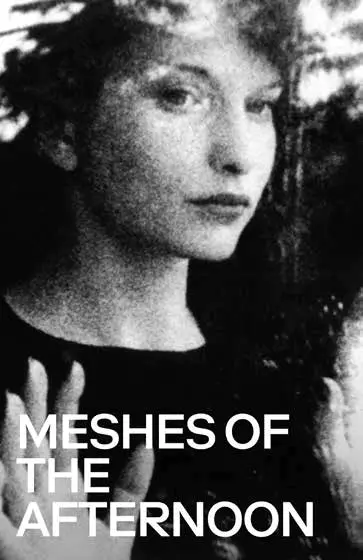
Eleanora Derenkowsky, also known as Maya Deren, who was born in Kiev in 1917 and emigrated to the US with her family when she was five years old, was an intellectual who worked as a choreographer, dancer, film theorist, poet, lecturer, writer and photographer throughout her life, as well as her identity as a filmmaker. Influenced by movie makers such as Georges Méliès (Haslem, 2002) and Jean Cocteau, as well as painters such as Marcel Duchamp (Keller, 2014), Deren has inspired many movie makers over the years, such as David Lynch, Stan Brakhage and Ingmar Bergman (Simsek, 2020). In his work Visionary Film: The American Avant-Garde, 1943-2000 (2002), cinema historian P. Adams Sitney identifies 1943 as the year in which American Avant-Garde Cinema was born and devotes the first chapter of the book to Maya Deren’s movie “Meshes of the Afternoon” (1943) (Sitney, 2002). What makes this movie, which she directed with her then-husband Alexander Hammid, so different is that it depicts a world in an unusual style where it is increasingly difficult to capture reality through creative editing, different camera angles and slow motion (Piper, 2014). “Meshes of the Afternoon”, which reminds of Luis Bunuel’s movie “An Andalusian Dog” (1929) with its style, does not have a clear subject like Bunuel’s movie in the same way. The movie, which tells the story of a woman’s “inner world” through objects such as knives, telephones and doors, is a unique masterpiece that pushes the boundaries between reality and fantasy (Fikriyat, 2019).
Waking Up to Life (2001)
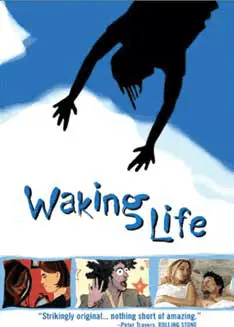
Richard Linklater, who made his name with the movies “Numb” (1990) and “Young and Excited” (1993), became famous with the movies “Before Sunrise” (1995), “Before Sunset” (2004) and “Before Midnight” (2013), which constitute the ‘Before’ trilogy and were shot nine years apart, and with “Childhood” (2014), which tells the story of a child’s experiences from age 5 to 18, which he shot over 12 years. However, Linklater, who can easily be considered one of the most creative directors of recent times, has a subject as creative as the ‘Before’ trilogy and the movie “Childhood”, and for some reason, his movie “Waking Up to Life” (2001) has not been talked about as much as his other movies. However, the number of people who think that “Waking Up to Life” is one of Linklater’s best movies should not be underestimated. Although it was initially shot with a digital camera, Waking Up to Life was later turned into an animated film using the rotoscope technique. The movie “Waking Up to Life”, which can be said to deserve great praise even for this reason alone, is also an extraordinary work that “explores subjects such as the nature of reality, dreams, consciousness, the meaning of life, free will and existentialism” (Yilmaz, 2020).

Countless short, medium and feature films have been produced in the 125-year history of cinema. Some films have been forgotten over time, while some films have reached the cult level over the years.
References
Altuntaş, M. (2017, Mayıs). Cannes Film Festivali tarihinde 8 büyük olay. Bant Mag.: https://bantmag.com/dergi/no-57/ cannes-film-festivali-tarihinde-8-buyukolay/
Çalışır, G. (2016, Şubat 19). Yeni Fransız Aşırılığı. Filmloverss: https://filmloverss.com/yeni-fransizasiriligi/
eg. (2009, Mayıs 9). Qatsi Üçlemesi’nden İnsanlığa Tutulan Ayna. Derin Düşünce: https://www.derindusunce. org/2009/05/09/qatsi-uclemesindeninsanliga-tutulan-ayna/
Fikriyat. (2019, Ocak 28). Şiiri Sinemanın Merkezine Yerleştiren Filmler. Fikriyat:https://www.fikriyat.com/galeri/sinema/siiri-sinemanin-merkezine-yerlestirenfilmler
Filmloverss. (2019, Temmuz 29). Sinemayla Hafıza Yaratmak: Chris Marker. Filmloverss: https://filmloverss.com/sinemayla-hafiza-yaratmak-chrismarker/
Haslem, W. (2002, Aralık). Deren, Maya. Senses of Cinema: https://www.sensesofcinema.com/2002/greatdirectors/deren-2/
Keller, S. (2014). Maya Deren: Incomplete Control. New York: Columbia University
Press. Mekas, J. (2008, Nisan). Jonas Mekas’tan Sinemanın 100 Yılı Karşıtı Manifesto.
http://manifesto-manifesto.blogspot.com/2008/04/jonas-mekastan-sinemann-100-yl-kart.html
Piper, J. (2014). The Film Appreciation Book: The Film Course You Always Wanted to Take. New York: Allworth Press. Şimşek, A. (2020, Haziran 19). Deneysel Sinemada Yeni Bir Çağ: Maya Deren.
Görüntü Dergi: https://www.goruntudergi.com/post/deneysel-sinemada-yeni-bircag-maya-deren
Sitney, P. A. (2002). Visionary Film : The American Avant-Garde, 1943-2000. Oxford: Oxford University Press. Usumi, E. (2018, Aralık 24). Enter the Void Hakkında Mutlaka Bilinmesi Gereken 15 Detay. Filmloverss: https://filmloverss.com/enter-the-void-hakkinda-mutlakabilmeniz-gereken-15-detay/
Yılmaz, C. (2020, Temmuz 18). Sizi pozitif şekilde etkileyecek 15 film. Tekmoloji:https://tekmoloji.com/sizi-pozitif-sekildeetkileyecek-15-film-3597/